
Shopping for a suit used to be straightforward: you either bought one or you didn't. But in 2026, the rental market has evolved into a legitimate option that competes head-to-head with traditional purchases. The question isn't whether rentals are "real" anymore; it's about figuring out which choice makes the most sense for your situation.
Let's cut through the noise and help you make a decision you'll feel good about.
The Single Most Important Factor: How Often Will You Actually Wear It?
Here's the truth that every menswear expert will tell you: frequency of use determines everything. If you're attending one or two formal events per year: a cousin's wedding, a charity gala, maybe a black-tie work function: renting makes perfect financial sense. You'll spend somewhere between $50 and $300 per rental, get exactly the style you need for that specific occasion, and hand it back when you're done.
On the flip side, if you find yourself needing formal wear three or more times annually, the math shifts dramatically. That third rental is where buying starts to break even, and every event after that is money saved.
Breaking Down the Real Costs in 2026
Let's talk numbers because assumptions don't pay bills.
Rental Pricing Today:
- Basic suit rental: $150–$200
- Premium designer rental: $200–$300
- Alterations (if needed): $20–$50 additional
Purchase Pricing:
- Entry-level quality suit: $500–$800
- Mid-range suit with quality construction: $800–$1,500
- Premium/custom suit: $1,500–$3,000+
Run a quick scenario. Say you attend four formal events per year and rent each time at $150 per event. That's $600 annually. After two years, you've spent $1,200: enough to buy a quality suit that would've served you for all eight events and beyond. The tipping point happens faster than most people realize.
When Renting Is Actually the Smart Move
Don't let the math above scare you away from rentals. There are absolutely situations where renting wins:
You're in a wedding party. When you're standing up in someone's wedding, the couple typically specifies the exact style, color, and accessories. You need that specific charcoal grey three-piece with a vest, not the navy suit hanging in your closet. Rentals handle group coordination seamlessly.
Your body is changing. Whether you're in the middle of a fitness transformation, recovering from an injury, or just between sizes, committing to a purchase doesn't make sense. Rent what fits you today, not what might fit you in six months.
You want to experiment with styles. Thinking about trying a double-breasted jacket or a shawl collar tuxedo? Renting lets you test-drive trends without the commitment. If you love it, buy it later. If you hate it, you're only out one rental fee.
Budget is tight right now. Life happens. If you need to look sharp for an important event but a $1,000 suit purchase would strain your finances, a $150 rental solves the immediate problem without creating a new one.
When Buying Becomes the Clear Winner
Here's where ownership really shines:
Professional requirements. If your job involves client presentations, court appearances, or regular networking events, you need a suit that's always ready. No scheduling pickups, no worrying about availability, no last-minute panic when an opportunity comes up.
Fit matters to you. This is huge. Rental suits come in standard sizes with limited alteration options. A purchased suit can be tailored precisely to your shoulders, sleeve length, trouser break, and body shape. The difference in how you look and feel is night-and-day obvious.
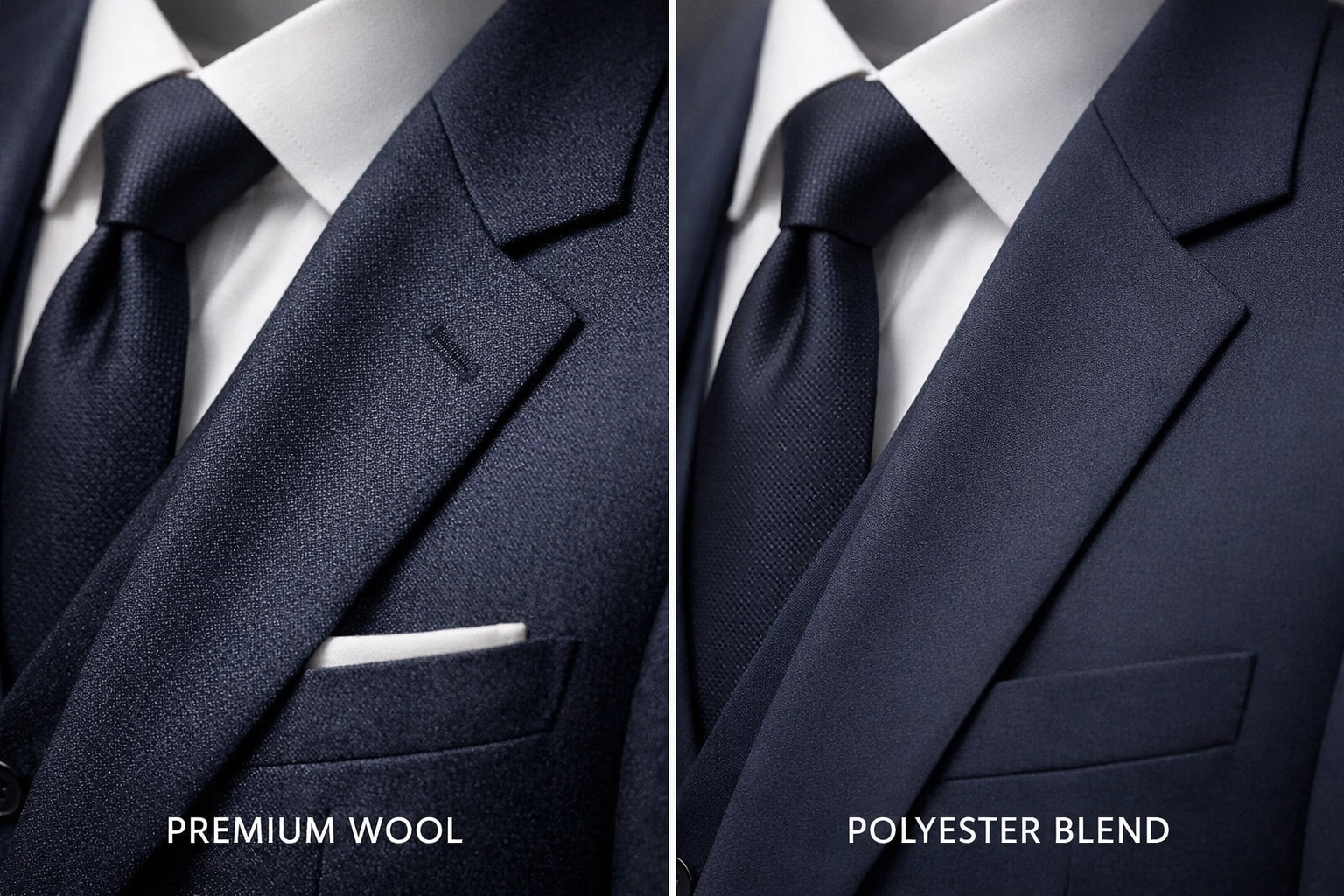
Quality is non-negotiable. Rental suits are workhorses designed to withstand dozens of wearers and industrial cleanings. They're typically made from polyester blends that hold up to abuse but don't breathe, drape, or wear like natural fibers. A purchased wool suit feels different, looks sharper, and lasts years with proper care.
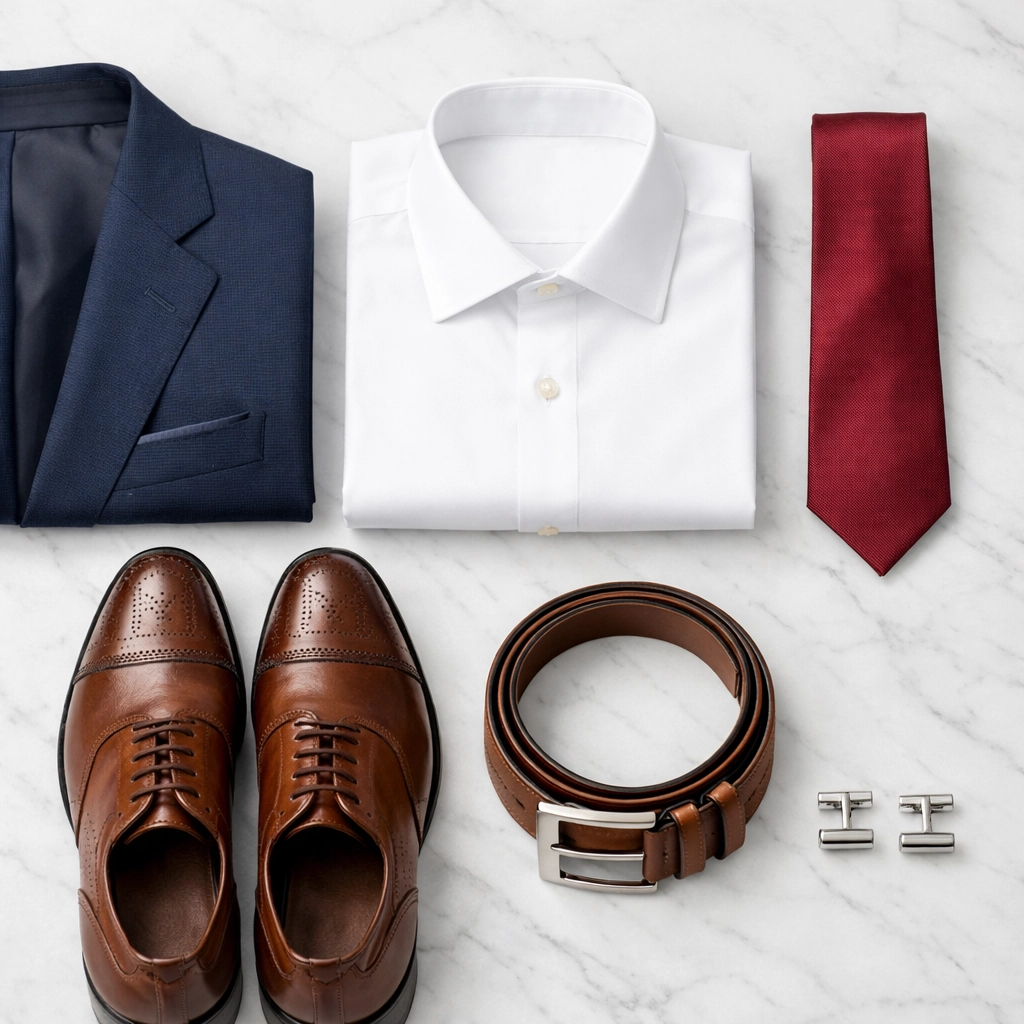
You're building a wardrobe. Every well-dressed man needs at least one solid suit as a foundation. Whether it's charcoal, navy, or a subtle check pattern, owning that cornerstone piece gives you endless styling options. Add a quality dress shirt and you're ready for anything from interviews to weddings.
The Quality Gap You Need to Know About
Not all suits are created equal, and the rental-versus-purchase decision amplifies those differences.
Most rental inventory relies on polyester or poly-blend fabrics. They're durable, wrinkle-resistant, and affordable to replace when they wear out. But they don't breathe well, can feel stiff, and lack the natural drape of quality materials.
When you buy, especially from a knowledgeable retailer, you get access to wool, wool blends, and even luxury fabrics like Italian Super 120s or cashmere blends. These materials regulate temperature, move with your body, and develop character over time instead of just wearing out.
The construction matters too. Fused suits (where fabric layers are glued together) dominate the rental market. Half-canvassed and full-canvassed suits (where layers are stitched) offer superior shape retention and comfort but cost more to produce: which is why they're rare in rental fleets.

Hidden Costs and Considerations
Before you commit either way, factor in these often-overlooked elements:
Rental damage policies. That minor wine stain or small tear could cost you $50 to $200 in damage or late return fees. Read the rental agreement carefully and consider whether you're the type who worries about these things. Spoiler: most people are.
Timing and availability. Popular rental styles book up fast, especially during wedding season (May through October). If you're planning around a specific event, you might need to reserve three months in advance. Ownership eliminates that stress entirely.
Tailoring investments. When you buy a suit off the rack, budget an additional $50–$150 for alterations. But here's the thing: those alterations are permanent. Every time you wear that suit, you benefit from that investment. Rental alterations only help you once.
Storage and maintenance. Owning suits means having closet space, knowing how to store them properly, and occasionally paying for dry cleaning. It's not a huge burden, but it's real. Rentals outsource all of that.
Making Your Decision: A Practical Framework
Still not sure which way to go? Answer these three questions:
-
How many formal events do you attend annually?
- 0–2 events: Strong case for renting
- 3–4 events: Break-even zone: consider your other factors
- 5+ events: Buying almost always wins financially
-
How important is perfect fit and comfort to you?
- Very important: Buy and tailor
- Moderately important: Buy if budget allows
- Not a priority: Renting works fine
-
What's your realistic budget right now?
- Under $200 available: Rent for this event
- $500–$800 available: Consider a quality purchase
- $1,000+ available: Invest in ownership
The 2026 Hybrid Approach
Here's a strategy that's gaining traction: own one versatile suit and rent for specialized occasions.
Invest in a charcoal or navy suit that fits impeccably and works for 80% of your formal needs: weddings, funerals, job interviews, date nights, business meetings. When you need something specific like a tuxedo for a black-tie wedding or a summer-weight linen suit for a destination event, rent those specialty pieces.
This approach gives you the reliability and perfect fit of ownership for regular use, plus the flexibility and variety of rentals for unique situations. It's not all-or-nothing.
The Bottom Line
There's no universal right answer here, and anyone who tells you otherwise is oversimplifying. Your career, lifestyle, body type, budget, and personal preferences all factor into this decision.
What we can tell you after years of outfitting men for every occasion: if you wear formal wear three or more times annually, buying pays for itself quickly. If you value fit and comfort, buying delivers an experience that rentals can't match. And if you're building a professional image, ownership signals that you're invested in your appearance.
But if you need a tux for your brother's wedding next month and that's your only formal event this year? Rent it, look great, and spend your money elsewhere.
The best choice is the one that matches your actual life: not the life you think you should have or the advice that worked for someone else.
Ready to explore your options? Stop by 700 Shop and let's talk through what makes sense for you specifically. Whether you're renting or buying, we'll make sure you walk out looking sharp.